0086-18057388688


European Flax Linen Fabric: An In‑Depth and Comprehensive Guide
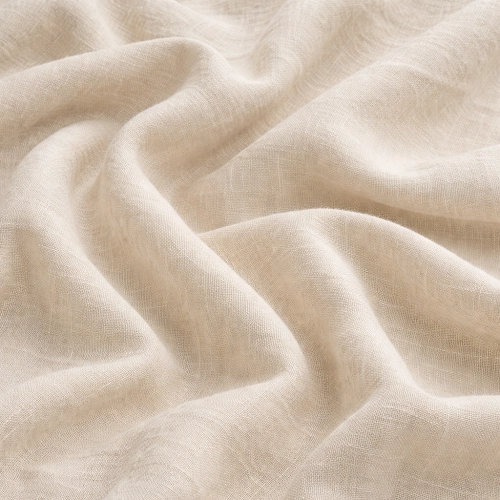
European flax linen is one of the world’s most esteemed natural textiles, prized for its durability, comfort, and ecological profile. Linen made from European flax stands apart in the global market due to centuries‑old cultivation traditions, advanced processing techniques, and stringent quality standards.
What Is Flax and Linen?
Flax (Linum usitatissimum) is a plant cultivated for both its seeds (used in food and oil production) and its fibers (used to make linen). When we speak of linen, we refer to the textile produced from the fibrous stems of the flax plant.
Unlike cotton, which grows in bolls, flax fibers are extracted from the plant stalk through a labor‑intensive process called retting and scutching. The fibers are long (often over 25 cm) and exceptionally strong, giving linen its characteristic durability and lustrous look.
European linen refers generally to linen made from flax grown and processed in European countries—especially Belgium, France, the Netherlands, Ireland, and Lithuania—which have climates and soils particularly suited to high‑quality fiber production.
A Historical Overview
Europe’s relationship with flax has ancient roots. Linen fabric was woven in ancient Egypt and classical Europe and was prized for its cool feel in warm seasons and its symbolic purity in funerary and ceremonial contexts. Northern Europe later became a heartland of fine linen production; by the Middle Ages, Flemish and Normandy textiles were traded across the continent.
Industrialization introduced mechanical spinning and weaving, but in the key flax regions of Europe, traditional craftsmanship persisted alongside modern manufacturing. Today, European linen brands combine heritage with innovation, commanding premium positions in global markets for fashion, home textiles, and technical applications.
Where European Flax Grows
The best flax fiber comes from regions with:
- Moderate rainfall that supports steady plant growth
- Cool growing seasons that strengthen fiber development
- Well‑drained soils, especially sandy loams
Northern France (notably Normandy), Belgium (especially Flanders), and the Netherlands form the core of quality flax cultivation, each with microclimates that contribute to superior fiber properties. Growing conditions here limit plant stress, which in turn yields fibers that are consistent in length and strength—a key quality metric in linen production.
Technical Aspects of Flax Fiber
Linen’s performance starts with its composition:
- Cellulosic Polymer Structure: Flax fibers are primarily cellulose, arranged in highly crystalline structures that provide tensile strength and rigidity.
- Fiber Morphology: Under microscopy, flax fibers exhibit a multi‑cellular structure with natural lumen (central canals) and fine fibrils; this contributes to moisture management and drying performance.
- Fiber Length: Long fibers (scutched fibers) are preferred for fine yarns; shorter fibers are often used in coarse linens or blended products.
Key technical properties include:
| Property | Typical Range/Attribute |
| Tensile strength | Greater than cotton |
| Moisture regain | ~12‑14% at 65% RH |
| Thermal conductivity | Lower than cotton |
| Elasticity | Low – tends to “crisp” |
| Luster | Natural sheen |
Flax’s moisture absorption and release make linen exceptional at keeping temperatures comfortable—cool in summer and warm in winter.
Cultivation and Harvesting
Flax cultivation involves a precise agronomic approach:
- Sowing: Seeds are sown densely to encourage tall, slender stalks.
- Growth: Plants develop over about 90–120 days, during which fibers form in the stem’s bast layer.
- Retting: A critical step in which microbial action breaks down pectins binding fibers to the stem. Methods include:
Field (dew) retting – microbes and moisture in soil break down pectins.
Water retting – immersion in tanks or ponds accelerates retting.
- Harvesting: Harvesters pull the plants to preserve fiber length—a practice called retting before dew—unlike grain crops that are cut.
- Drying and Storage: Proper drying maintains fiber quality before processing.
Processing Flax to Fiber
Once retted and dried, flax undergoes:
- Breaking: Crushing the stems to break woody matter.
- Scutching: Scraping fibers free of broken shives.
- Hackling/Combing: Aligning fibers and removing short bits to produce long, smooth streams ready for spinning.
This sequence demands skilled machine settings and operator expertise; for European linen, this precision underpins consistent quality.
Yarn and Weave Structures
European linen yarns vary by intended use:
- Fine yarns: 40–120+ Nm (metric count), used in dress fabrics and luxury linens.
- Mid‑range yarns: 10–40 Nm, common in shirting and décor.
- Coarse yarns: Under 10 Nm, for utilitarian or rustic textiles.
Weave structures include:
- Plain weave: Standard for linens with balanced strength.
- Twill and herringbone: Adds drape and visual interest.
- Damask and jacquard: Complex patterns for high‑end home textiles.
Weave choices affect characteristics like drape, opacity, and durability.
Performance and Technical Characteristics
European linen fabric excels in several areas:
Durability
Linen’s high tensile strength—higher than cotton’s—means garments and household items last longer, often improving with washing.
Comfort and Moisture Management
Linen absorbs moisture without feeling damp and wicks sweat away, making it ideal for warm climates and undergarments.
Thermoregulation
The fiber’s structure allows air circulation and heat dispersion.
Hygiene and Allergen Profile
Linen is naturally hypoallergenic and resists bacterial growth due to its moisture regulation.
Environmental Footprint
European linen is often grown and processed with minimal chemical inputs; flax requires little irrigation and many regions use traditional dew‑retting systems with low energy demand.
Environmental and Sustainability Considerations
European linen’s sustainability is a key part of its appeal:
- Low Input Agriculture: Flax needs fewer pesticides and fertilizers compared to many crops.
- Biodegradable Fiber: End‑of‑life linen fully decomposes.
- Efficient Water Use: Especially with dew retting.
- By‑product Valorization: Flax seeds are harvested for oil, and shives (from processing) are used in animal bedding or construction composites.
Many European producers and brands also pursue certifications (GOTS, OEKO‑TEX®) or track carbon footprints to help buyers make informed choices.
Applications of European Flax Linen
Fashion
European linen is favored for:
- Shirts, blouses, dresses
- Trousers and suits
- Lightweight summer wear
Designers value linen for its natural drape and textural depth.
Home Textiles
Its strength and comfort make linen ideal for:
- Bed linens and pillowcases
- Tablecloths and napery
- Upholstery and decorative fabrics
Technical and Industrial Uses
Emerging uses include:
- Composite materials (e.g., automotive interiors)
- Insulation and acoustic panels
- Specialty paper and filtration media
Caring for Linen
Best practices extend garment life:
- Wash: Gentle or machine wash cool; avoid harsh bleach.
- Dry: Air dry or tumble dry low to medium.
- Iron: Warm iron enhances smoothness and sheen.
- Storage: Keep cool, dry, and folded to prevent creasing.
Linen becomes softer and more lustrous with use.
European Linen in the Global Market
European linen commands a premium due to:
- Controlled quality at source
- Traceability and sustainability
- Heritage branding and craftsmanship
Producers collaborate with international fashion houses, home textile brands, and technical innovators.
European flax linen fabric represents a unique convergence of tradition, science, and sustainability. From carefully tended fields in northern Europe to precision manufacturing and diverse applications, linen embodies performance and ecological integrity. Whether chosen for luxurious tablecloths, breathable garments, or cutting‑edge composites, European linen stands as an enduring symbol of quality in the textile world.